What's in a name?
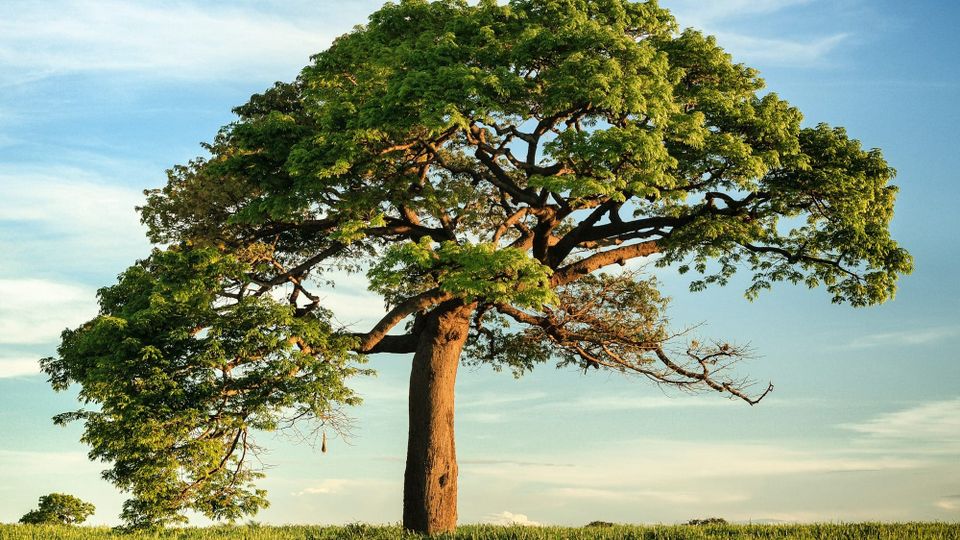
I recalled a story told to me by my parents—specifically my mum—about how I got my name. It was a lovely story.
In the Akamba tradition, we are named after our grandparents; this happens in many African communities. The Bantus, being patriarchal societies, name the first child after the father’s parents.
The first boy would be named after the paternal grandparents—the second child, if a boy, would be named after the maternal grandfather. Now, if the second child is a girl, she is named after the paternal grandmother. So, to name the maternal parents, the couple would have to have four children.
If we go by the thinking that we must replace both sets of grandparents and ourselves, then a couple would need to have six kids.
Talk about population explosion! I already think anything more than two is too much.
Woe unto the child whose grandparents didn’t have “great” names.
Now, back to my story. According to Kamba tradition, as I was the fourth child and the second girl, I was supposed to be named after my maternal grandmother. And she had a big name!
From what I recall, my mum told me that when I was born, my grandmother said they should name me Mwende, which means the loved one.
It’s a beautiful name—the loved one. I like to think I carry it very well.
The story goes that my grandmother didn’t want me to have such an adult name. I was, after all, a tiny little baby. Born via C-section. I presume it must have been a very hard labour—C-sections back then were not as common as they are today.
I’ve always loved this story—that my maternal grandmother chose to defy tradition and gave me this very special name.
Later, as I was thinking about whether the name Beloved Dancer was suitable for my little writing project, I decided to call my mum and ask her to refresh my memory on how I came to be called Mwende.
After a brief chitchat about whether it’s been raining in shags, how she’s doing, the goats, the farmhands—who’s giving her trouble—and how excited she is about the rain, I asked:
“Mum, you once told me…” and I recounted what I could remember.
First, I asked her to remind me of my grandmother’s big name. Then I asked why I wasn’t named after her.
And boom! She dropped the truth on me—forty-seven odd years later.
She laughed and said, “First, you were a mistake!”
I laughed so hard. Like-where is the filter? She has none! This woman can say the most politically incorrect things, so unperturbed, like it not a big deal. I love her for it.
Sometimes we worry too much about political correctness. But with older relatives and family, it’s still okay to blurt things out — get roasted, chided or corrected
Anyway, she said what she said. I was a mistake.
And she went on to provide evidence:
“Look at the age difference between you and your brother—it’s four years! Your siblings’ age differences were always two years. First to second born—two years. Second to third—two years. You? Four years!”
That was a really funny conversation. I accepted it, amidst lots of laughter with my mum, that I was most certainly a mistake.
When I meet my mum's friends with her, they are often surprised to learn that she has another daughter. Everything makes sense now. Still, she's always so proud to say, "This is my lastborn! Don't you know her?"
I asked her again about the name.
She said, “No, that’s not why you were called Mwende.”
Another shocker.
That little memory of mine? Gone. Just like that. And yet, I am sure I did not dream this story up. I can almost bet that as a young girl and understanding the Kamba tradition, I must have pressured her to tell me why I did not carry my grandmother's name, yet all my siblings were named after their grandparents.
I suspect my parents must have told me a fib or two.
“You see,” she continued, “your father and I were Christians, and we felt that we did not want to call you her name."
My grandmother’s name was Muthembo.”
I didn’t quite understand what the big deal was. I kind of dig the name. It’s a mouthful—Muthembo. You can’t ignore it. It commands attention.
Boy, I would have loved that!
On further inquiry, I learned that Muthembo in Kikamba means shrine.
It was so deeply ingrained back then that anything traditional, especially related to worship, was considered ungodly.
We now know better.
That our ancestors knew God. That they worshipped their God under trees. Had sacred spaces—shrines—to commune with their Maker.
According to her, as new Christians, they chose to give me a name that wouldn’t be in conflict with their new beliefs.
As we spoke, I could sense there was undoubtedly more awareness now, I wouldn’t call it regret but a softened knowing. There was nothing wrong with the name.
Kamba’s are known for very potent witchcraft, so maybe that’s another layer to their decision.
I never knew my grandparents to practice any form of witchcraft or sorcery—just putting that out there!
In an alternate universe, I go by Muthembo
Wow! I wonder what I’m up to.
Sometimes I daydream that I’d make an awesome housewife.
I picture myself barefoot and pregnant—one toddler on my hip, another tugging the hem of my dress—in the kitchen making some hot chocolate on the kitchen island.
Every so often, I glance out at the lush green landscape in front of me. Birds trilling and flying about. In the distance, I see weaver birds making their nests. The bright yellow males doing the most to impress their prospective mates.
And maybe, just maybe, in her quiet way, Muthembo found her own shrine in that kitchen—nestled between hot chocolate and birdsong.